
Sports Medicine Doctor in Hyderabad — Dr. Naresh P. Hanagodu
Dr. Naresh P. Hanagodu, MBBS, MS (Ortho), D.Ortho (Bombay), is a Consultant Orthopedic & Joint Replacement Surgeon with 25+ years of experience, treating sports injuries in athletes and active people of every age. ACL and ligament tears, meniscus injuries, shoulder dislocations, tennis elbow and ankle sprains — physiotherapy and bracing first, arthroscopy (keyhole surgery) when genuinely needed.
Book a sports injury consultation
Leave your number — our care coordinator will call you back during clinic hours (Mon–Sat, 1:00–6:30 PM).
Sports injuries we treat
Sports injuries do not only affect athletes — they happen to weekend runners, gym-goers, badminton and cricket players, and anyone who leads an active life. At Sharada Orthopaedic Centre in Bowenpally, Secunderabad, Dr. Naresh P. Hanagodu diagnoses and treats the full range of sports-related bone, joint, ligament and tendon injuries.
Knee injuries
ACL and other ligament tears, meniscus injuries, patellar (kneecap) dislocation, cartilage damage.
Shoulder injuries
Rotator cuff tears, recurrent shoulder dislocation and instability, labral tears.
Elbow injuries
Tennis elbow, golfer's elbow and ligament injuries from throwing and racquet sports.
Ankle & foot injuries
Ligament sprains that keep recurring, Achilles tendon problems, plantar fasciitis.
Hip injuries
Hip labral tears, muscle strains and hip impingement in runners and dancers.
Fractures & stress fractures
Sports-related bone injuries, including stress fractures from overtraining.
Most sports injuries heal without surgery
Rest alone is often not enough — but surgery is rarely the first step either. Most sprains, strains and even many ligament injuries settle with a structured plan:
- Accurate diagnosis first — examination, and X-ray or MRI where needed, so we treat the actual injury, not a guess
- Protection and bracing in the early phase, with pain and swelling control
- A staged physiotherapy programme to rebuild strength, balance and flexibility
- A planned, tested return to sport — going back too early is the most common cause of re-injury
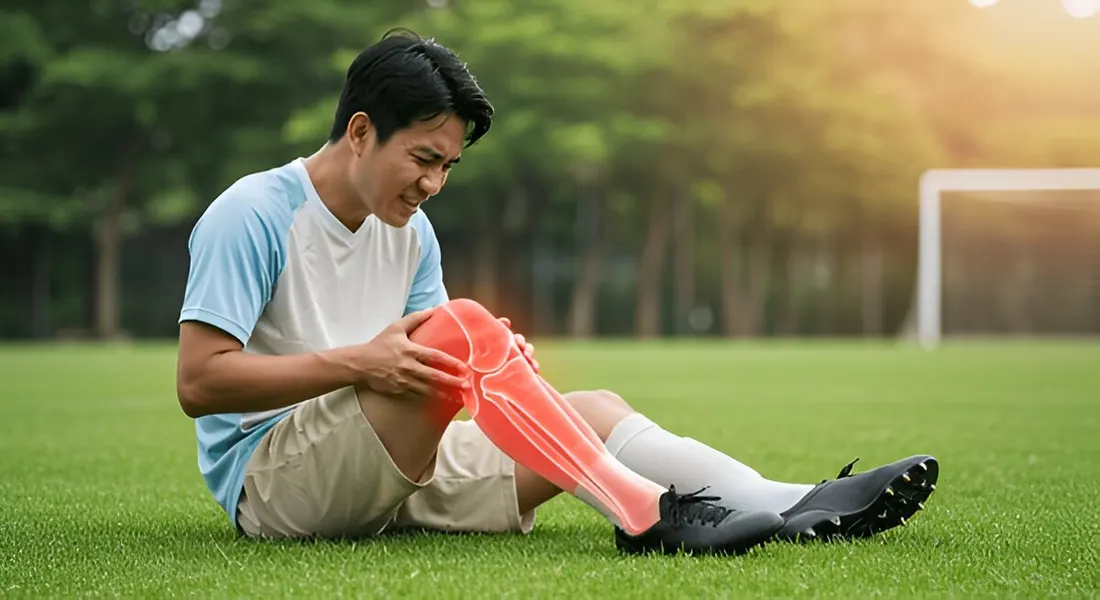
Arthroscopy: how keyhole surgery treats sports injuries
Arthroscopy is surgery through 2–3 small (under 1 cm) incisions using a camera and fine instruments, instead of one large open cut. For most ligament, meniscus and labral injuries it means less pain, smaller scars, a shorter hospital stay — usually day-care or one night — and an earlier start to rehabilitation. Dr. Naresh performs arthroscopy at an associated hospital, with cashless insurance support for eligible policies; consultations and all follow-up happen at the Bowenpally clinic.
Assess
Examination and MRI confirm exactly which structure is torn and whether surgery will genuinely help.
Scope
Through keyhole incisions, the joint is inspected with a camera — the most accurate way to see the injury.
Repair or reconstruct
Torn tissue is repaired, trimmed or reconstructed (for example an ACL graft) in the same sitting.
Rehabilitate
A written, sport-specific physiotherapy plan starts early and is reviewed by Dr. Naresh at every visit.
ACL tear: does it always need surgery?
No. The decision depends on your age, sport, how unstable the knee feels and whether other structures are torn. Less active people with a stable knee can do well with physiotherapy alone. Athletes in pivoting sports (cricket, football, badminton, kabaddi) and anyone whose knee keeps giving way usually benefit from ACL reconstruction — an arthroscopic operation that rebuilds the ligament with a graft.
Left unstable, a knee that repeatedly gives way can damage the meniscus and cartilage over time — which is why a proper assessment soon after the injury matters.
Meniscus tear: repair, trim or physio?
The meniscus is the knee's shock absorber. Small, stable tears in the outer zone often settle with physiotherapy. Tears that cause locking, catching or persistent pain are treated arthroscopically — repaired with stitches where the tissue can heal, or trimmed where it cannot. Preserving as much meniscus as possible protects the knee from early arthritis, and that principle guides every decision Dr. Naresh makes inside the joint.
Returning to sport: a realistic timeline
Every injury is different — these are typical ranges, always confirmed against your strength and stability tests rather than the calendar:
Days to 2–3 weeks with protection, ice and early physiotherapy.
Weeks to a few months with a loading programme; injections only in selected cases.
Walking the same or next day for most knee scopes; desk work within days to 2 weeks.
Protected weight-bearing first weeks; sport typically after 3–4 months.
Jogging around 3 months; pivoting sport usually 6–9 months, after strength testing.
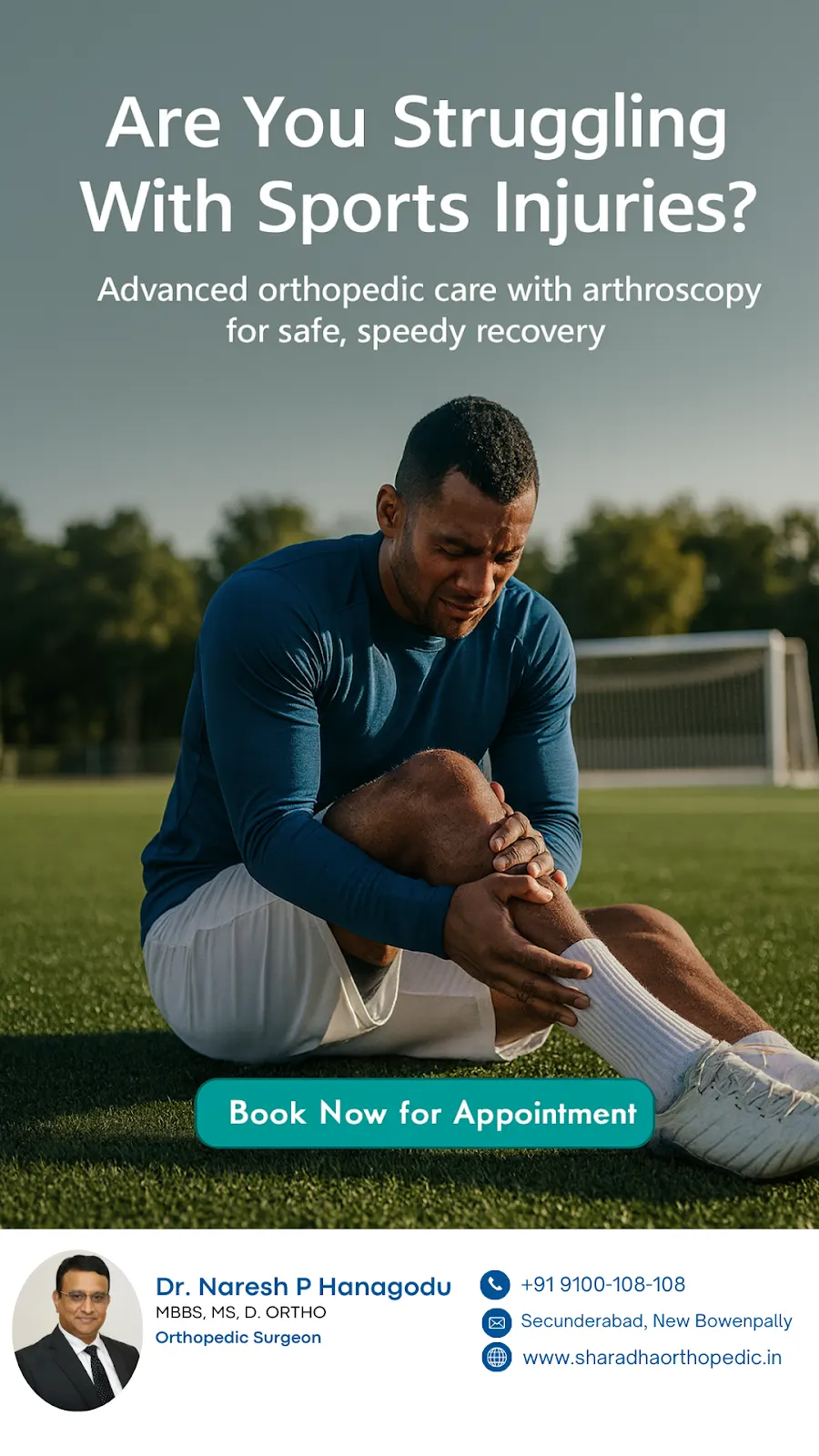
Sports injuries in children and teenagers
Yes, we treat young athletes — and their injuries are not just smaller versions of adult injuries. Growing bones have growth plates that can be injured in ways adult bones cannot, and overtraining injuries (stress fractures, heel and knee growth-plate pain) are common in school-level sport.
Dr. Naresh assesses young athletes with growth in mind: protecting the growth plate, correcting training load, and involving parents and coaches in the return-to-sport plan. Surgery in this group is reserved for injuries that genuinely need it.
Paediatric bone and joint problems beyond sport — clubfoot, limb alignment, developmental hip issues — are covered on our paediatric orthopaedics page.
Why active people choose Sharada Orthopaedic Centre
One doctor, whole journey
Dr. Naresh diagnoses, treats, operates when needed and clears you for return to sport personally — with 25+ years of orthopaedic practice behind every decision.
Physio first, surgery when needed
Most sports injuries here are treated without an operation; arthroscopy is advised only when the injury will not heal on its own.
Honest, tested clearance
Return-to-play decisions based on strength and stability testing — not guesswork — because re-injury is worse than a slower comeback.
Local and reachable
Ganesh Nagar Colony, Bowenpally, Secunderabad — Mon–Sat 1:00–6:30 PM. Cashless insurance support for eligible policies. Rated 5.0 on Google by 70+ patients.
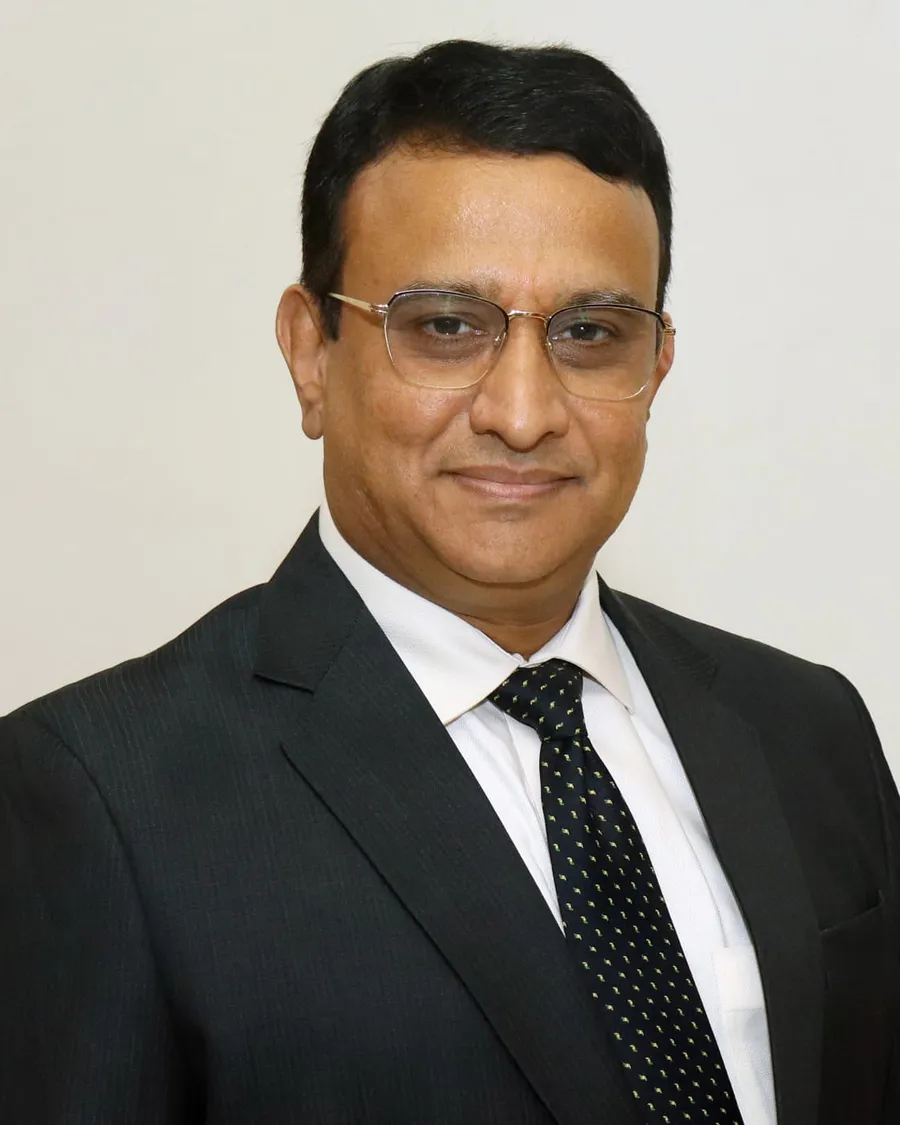
Dr. Naresh P. Hanagodu
Special interests: sports injury management, knee and hip replacement, spine care and trauma. Rotary Vocational Award (2001–02), Rotary Club of Secunderabad Cantonment. A former Indian cricket wicketkeeper has publicly credited his recovery from a career-threatening back injury to Dr. Naresh's care.
About Dr. NareshSports injury consultations for Secunderabad and Hyderabad
The clinic is at Ganesh Nagar Colony, Bowenpally, Secunderabad 500011. Players and active people usually reach us within 10–20 minutes from the areas below, and within about 30 minutes from Kompally, Balanagar, Malkajgiri and Sanath Nagar. Bring existing scans and reports — and your sports shoes if a gait check is useful.
Tap an area for directions from there.
Consulting hours Monday to Saturday, 1:00 PM to 6:30 PM; Sunday closed.
Watch: Dr. Naresh explains, in under a minute
Short patient-education reels from @drnareshhanagodu. Tap a video to play it here.
Frequently asked questions about sports injury treatment in Hyderabad
Who should see a sports medicine doctor in Hyderabad?
Is rest enough for a sports injury?
Do all ACL tears need surgery?
Is arthroscopy better than open surgery for sports injuries?
How soon can I return to sports after an injury?
Do you treat children and teenage athletes?
How much does ACL surgery cost in Hyderabad?
What is the treatment for tennis elbow?
Can a rotator cuff tear heal without surgery?
My ankle keeps twisting again and again — what should I do?
Do I need an MRI for my sports injury?
Where is the surgery done if I need it?
Book a sports injury consultation
Sharada Orthopaedic Centre, Ganesh Nagar Colony, Bowenpally, Secunderabad 500011 · Monday to Saturday, 1:00 PM – 6:30 PM. Bring your scans and reports.