sharadhaorthopedic@gmail.com +91 91001 08108 Ganesh Nagar Colony, Bowenpally, Secunderabad 500011 Mon–Sat 1:00 PM – 6:30 PM · Sunday closed
Pediatric Orthopaedics · Hyderabad & Secunderabad

Pediatric Orthopaedic Care in Hyderabad — Children's Bone, Joint & Fracture Care by Dr. Naresh P. Hanagodu

Dr. Naresh P. Hanagodu, MBBS, MS (Ortho), D.Ortho (Bombay), is a Consultant Orthopedic & Joint Replacement Surgeon with 25+ years of experience who treats children's fractures, injuries, limping and leg-shape concerns at Sharada Orthopaedic Centre, Ganesh Nagar Colony, Bowenpally, Secunderabad. Children's bones are still growing and heal differently from adults' — most childhood bone problems need a correct diagnosis and reassurance or a cast, not an operation. For conditions that need a dedicated paediatric orthopaedic sub-specialist — clubfoot, hip dysplasia, complex deformity — we say so plainly and refer you to the right hands.

A limb that looks bent after a fall, bone through the skin, or a child who won't move an arm or leg? Go to the nearest emergency department now — then call us for the fracture care and follow-up.
25+years of orthopaedic practiceyears' practice
0–18babies to teenagers, casts to sports injuriesbabies to teens
5.0Rated by 70+ patients on Google

Worried about your child? We'll call you back

Two fields, 15 seconds. Our coordinator calls during clinic hours (Mon–Sat 1:00–6:30 PM) and fixes the earliest slot. Bring or WhatsApp any X-ray already taken.

How should we reach you?

We never share your number. Emergency right now? Call instead — it's faster.

Start here

Is it serious? A plain guide for worried parents

Most childhood bone and leg worries turn out to be normal stages of growth. The three tiers below tell you how urgently to act — and the checker underneath gives you an answer in ten seconds.

See a doctor today

Same day — some of these are emergencies.

  • An injury with deformity, or a child who refuses to use the arm or leg
  • A limp with fever, or a hot, swollen joint
  • Bone pain that repeatedly wakes the child at night
  • Any limp lasting more than a few days
  • Sudden hip or knee pain in a heavier teenager
  • Tight, pale, blue or numb fingers or toes after a cast

See a doctor this week

Not an emergency — but worth an examination.

  • A painless limp that comes and goes
  • Leg-shape change that is one-sided or getting worse
  • Heel or knee pain in a sporty child that is limiting play
  • A baby with stiff hips at nappy changes or uneven thigh creases
  • Toe-walking that persists past age 3

Usually normal — watch

Common stages of growth. Come in if they break the pattern.

  • Flexible flat feet in a child under 8
  • Bow legs in a baby under 2
  • Knock knees between ages 3 and 7
  • In-toeing that improves year on year
  • Night-time "growing pains" in both legs, gone by morning, with normal play by day

10-second parent checker

Tick what applies to your child. General guidance, not a diagnosis — when in doubt, call us.

Your result Tick a few boxes

We will show you whether to act today, this week, or simply keep watching.

What we treat

Conditions we see every week

Choose your child's age to highlight what usually shows up at that stage — or read straight through.

Children's fractures & growth-plate injuries

Casts where possible, gentle fixation where truly needed — with growth-plate checks so future growth is protected. Children's fractures heal in roughly half the adult time. More on fracture care →

The limping child

A limp always has a reason — from a pebble in the shoe to a hip that needs attention. We examine the same day, because the serious causes are the ones that cannot wait.

Bow legs & knock knees

Usually normal stages of growth — bow legs straighten by about 2, knock knees settle between 3 and 7. We X-ray only when the pattern is one-sided, worsening, or outside the normal window.

Flat feet & in-toeing

Flexible flat feet in young children rarely need anything — no insoles, no "corrective shoes". We check for the stiff, painful minority that does need attention, and leave the rest to grow.

Growing pains

Real, benign and common: aching in both legs at night, gone by morning, with normal play by day. We diagnose them honestly — after making sure it is not one of the conditions that only pretends to be growing pains.

Heel & knee pain in sporty kids

Sever's disease (heel) and Osgood-Schlatter (below the kneecap) are growth-area overload, not damage. Activity tuning and a simple plan — usually no scans, no stopping sport for months.

Teen sports injuries

Ankle sprains, shoulder dislocations, knee ligament injuries in adolescents — assessed with growth plates in mind, because a "sprain" at 14 can be a growth-plate fracture. More on sports injuries →

Clubfoot, hip dysplasia (DDH) & complex conditions

Diagnosed and explained here — treated by dedicated paediatric orthopaedic sub-specialists. Clubfoot needs Ponseti serial casting; DDH needs specialised bracing; we refer you to the right hands and follow up alongside. Why we refer →

The science, simply

Children's bones are different — which is why most children don't need surgery

A child's skeleton is not a small adult skeleton. Three differences change almost every decision:

  • Growth plates. Soft growing zones near the ends of bones power growth — and need protecting. An injury near a growth plate is why children's fractures deserve orthopaedic follow-up, not just a cast and goodbye.
  • Remodelling power. A moderately angulated fracture that would need surgery in an adult can straighten itself as a child grows. Knowing how much a bone will remodel — by age, bone and direction — is exactly what decides cast versus operation.
  • Speed. Children's fractures typically heal in 3–4 weeks — roughly half the adult time — and stiffness after casting is rare. Children almost never need the months of physiotherapy adults do.
The same differences cut the other way: what looks like a sprain in a teenager can be a growth-plate fracture, and a "normal X-ray" can hide one. That is why we compare both limbs when the picture is unclear.
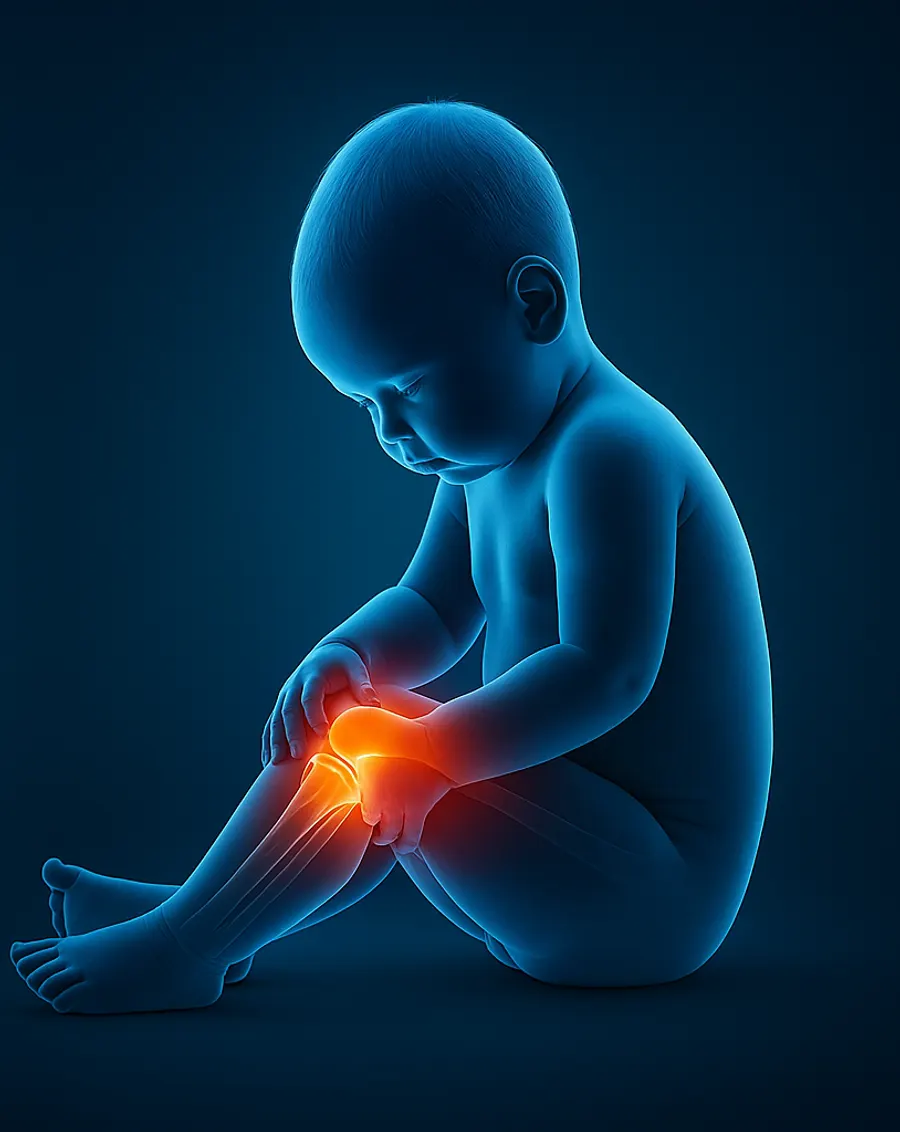
Illustration of a young child's skeleton with the knee growth area highlighted
What to expect

What happens at your child's visit

We watch before we touch

Walking, playing, climbing onto the couch — children show more in two minutes of play than in any scan. The examination is gentle and unhurried.

X-ray only when it changes the decision

On-site X-ray at child-dose settings; both limbs compared when a growth plate could confuse the picture. No routine scans "just to be safe".

The plan, in plain words

Explained to you and to your child — what it is, what we do, what happens at home, and exactly what should make you come back sooner.

Follow-up until finished

Casts are applied, checked and removed here, growth-plate injuries are reviewed until growth is confirmed normal, and the same doctor sees your child every visit.

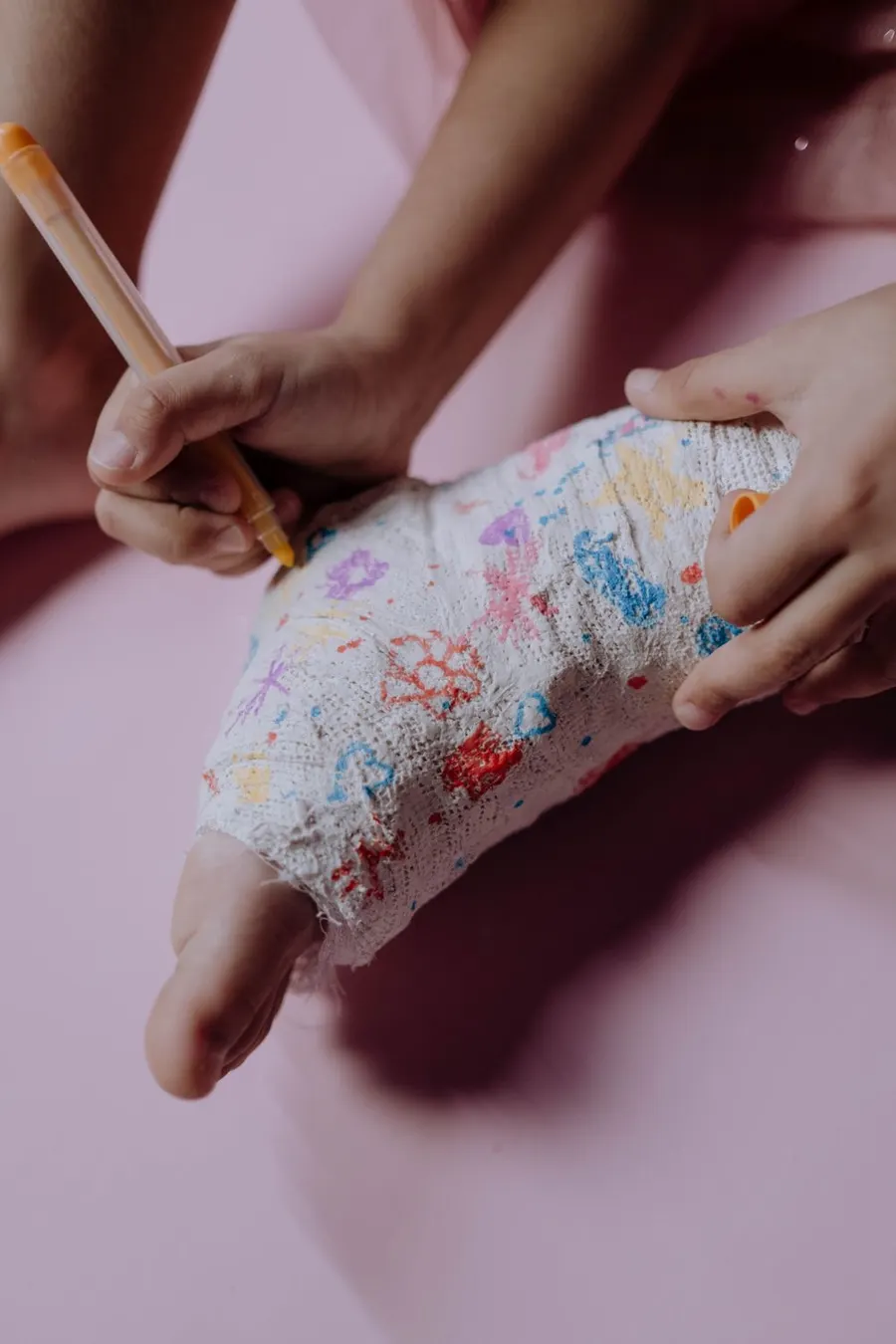
Child drawing with colour pens on an arm cast
The practical part

Living with a cast: a parent's guide

  • Keep it dry. Bag and tape it for baths; a wet plaster cast softens and stops working. If it gets soaked, call us.
  • Never poke anything inside for itching — pens and knitting needles cause wounds we cannot see. Cool air from a hair dryer helps.
  • Elevate for the first 48 hours — on pillows, above heart level — to keep swelling and pain down.
  • School is fine; sport waits. Writing, walking and classes are usually fine within days — running, cycling and contact games wait for the doctor's go-ahead.
  • Decorating is allowed. Pens on the outside are fine — most children end up proud of the cast. Removal is loud but does not cut skin; we show the child first.
Return immediately if you see any of these five: tight, pale, blue or cold fingers/toes · pain that keeps worsening despite elevation and medicine · new numbness or tingling · a bad smell or discharge from the cast · the cast cracks, softens or slips.
The honest line

When your child DOES need a paediatric sub-specialist

Some childhood conditions deserve a dedicated paediatric orthopaedic surgeon or a children's hospital team: clubfoot (Ponseti serial casting from the first weeks of life), developmental dysplasia of the hip (specialised bracing in infancy), limb lengthening and complex deformity correction, scoliosis, cerebral palsy surgery, and bone tumours.

When we see one of these, we say so at the first visit, explain the condition in plain words, refer you to the right sub-specialist, and stay available for everything else your child's bones need. A clinic that claims to treat everything treats some of it badly — honesty here protects your child.

Same daya limping or injured child is examined — the serious causes cannot wait
3–4 weekstypical healing time for most children's fractures — about half the adult time
Plainly saidif your child needs a sub-specialist, you hear it at the first visit
Why here

Why parents choose Sharada

  • The same senior doctor at every visit — examination, cast, follow-up and the final "all clear".
  • Casts first, surgery only when truly needed — children's remodelling power is used, not ignored.
  • Honest referral to paediatric sub-specialists for clubfoot, DDH and complex conditions.
  • X-ray on site at child-dose settings — diagnosis in one visit, not three.
  • Telugu, Hindi and English — children are spoken to, not just about.
  • Rated 5.0 on Google by 70+ patients — Ganesh Nagar Colony, Bowenpally, Secunderabad.
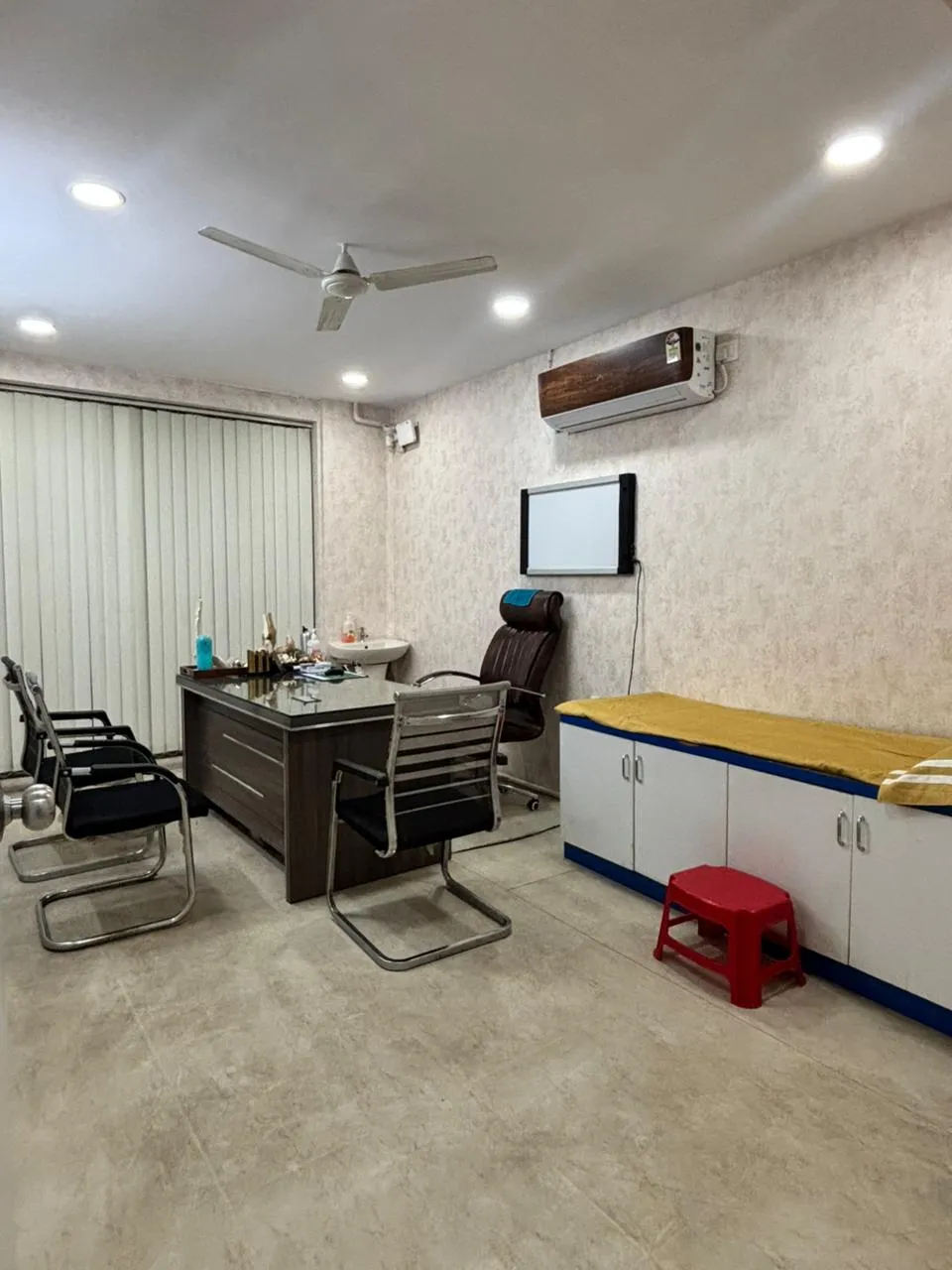
Consultation room at Sharada Orthopaedic Centre, Bowenpally
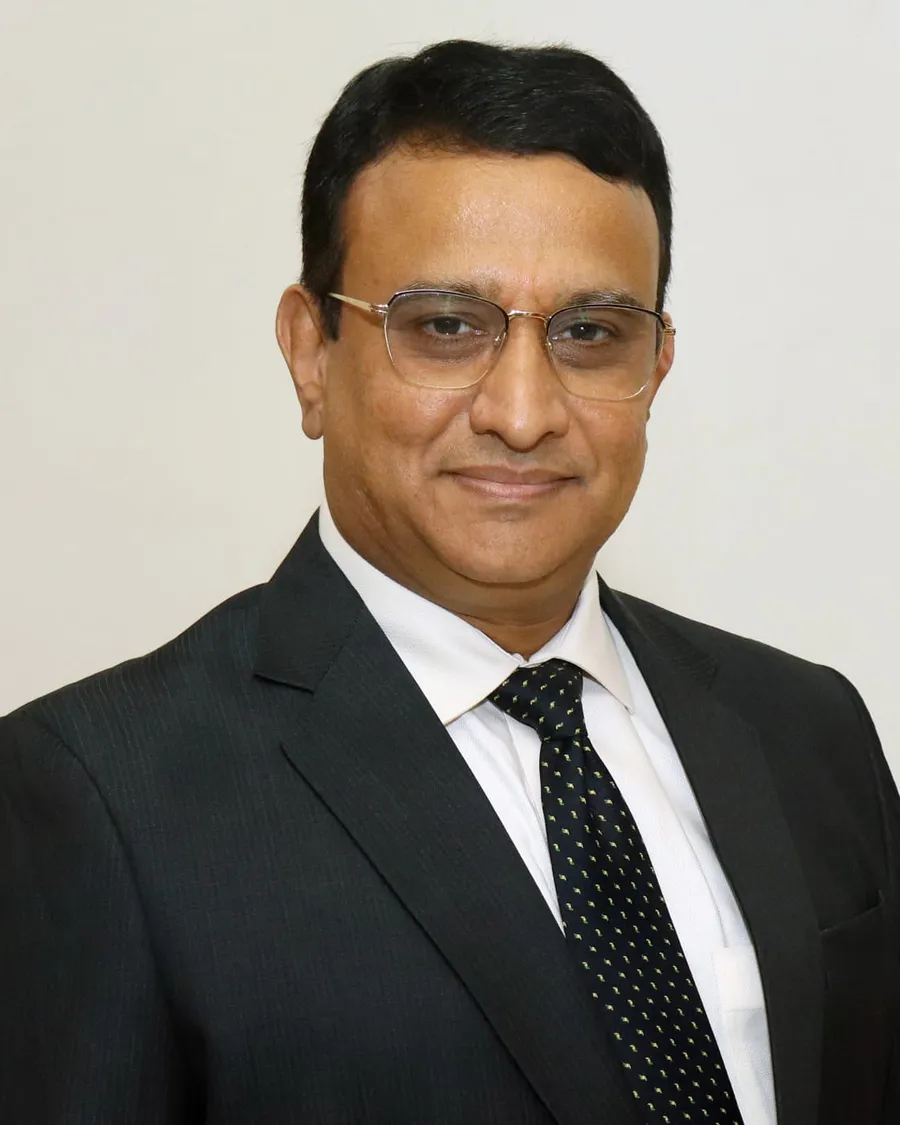
Dr. Naresh P. Hanagodu
Meet the doctor

Dr. Naresh P. Hanagodu

MBBS, MS (Ortho), D.Ortho (Bombay)Consultant Orthopedic & Joint Replacement Surgeon25+ years1,200+ joint replacements

Children's fracture and orthopaedic care alongside knee and hip replacement, spine care and sports injuries — 25+ years of treating families across Secunderabad, often two generations of the same one. Rotary Vocational Award (2001–02), Rotary Club of Secunderabad Cantonment. Practises at Sharada Orthopaedic Centre, Bowenpally.

About Dr. Naresh
From our Instagram

Watch: Dr. Naresh explains, in under a minute

Short patient-education reels from @drnareshhanagodu. Tap a video to play it here.

Where we are

Children's orthopaedic care for Secunderabad and Hyderabad

Ganesh Nagar Colony, Bowenpally, Secunderabad 500011 — ground-level and pram-friendly, 10–20 minutes from the areas below and about 30 minutes from Kompally, Balanagar, Malkajgiri and Sanath Nagar. Bring any X-rays already taken; if you cannot come in yet, WhatsApp the image first.

Tap an area for directions from there.

Consulting hours Monday to Saturday, 1:00 PM to 6:30 PM; Sunday closed.

FAQ

Frequently asked questions about children's orthopaedic care in Hyderabad

Who is the best pediatric orthopedic doctor in Hyderabad?
There is no official ranking. For children's fractures, limping and leg-shape concerns, you want an experienced orthopaedic surgeon who examines the child properly, X-rays only when it changes the decision, protects growth plates, and follows up personally — Dr. Naresh P. Hanagodu, MS (Ortho), with 25+ years of experience, provides this at Sharada Orthopaedic Centre, Bowenpally, Secunderabad. For clubfoot, hip dysplasia and complex deformity, the honest answer is a dedicated paediatric orthopaedic sub-specialist — and we refer you to one when that is what your child needs.
Does my child need a paediatric orthopaedic specialist or a general orthopaedic surgeon?
For the everyday majority — fractures, sprains, limping, bow legs, flat feet, heel and knee pain — an experienced orthopaedic surgeon who treats children regularly is the right first stop. A dedicated paediatric orthopaedic sub-specialist is needed for clubfoot, developmental hip dysplasia, limb lengthening, scoliosis, cerebral palsy surgery and bone tumours. We treat the first group and refer the second, and tell you which is which at the first visit.
My child is limping but says nothing hurts — should I worry?
Yes — a limp always has a reason, and a painless limp still needs an examination. Causes range from the trivial to hip conditions that are serious precisely because they can be painless. See a doctor within days for any limp, and the same day if there is fever, a hot swollen joint, or the child cannot bear weight.
Are bow legs normal in a baby? When do they need treatment?
Bow legs are normal in babies and usually straighten by about age 2 — many children then swing to knock knees before straightening again. See a doctor if the bowing is one-sided, getting worse rather than better, still marked after age 2–3, or accompanied by short stature or pain — these patterns need an X-ray to rule out conditions like Blount's disease or rickets.
Are knock knees normal in a child?
Usually yes. Knock knees are a normal stage between about ages 3 and 7 and correct themselves as the child grows. We examine when they are one-sided, severe, painful, worsening after age 7–8, or associated with short stature — the small minority with an underlying cause.
Does my child need arch supports or special shoes for flat feet?
Usually no. Flexible flat feet are normal in young children — the arch commonly appears by around age 8 — and insoles or "corrective shoes" do not change how the foot develops. We examine for the exceptions: a stiff or painful flat foot, or one that appears after an injury, which do need attention.
Are growing pains real? How do I know it isn't something serious?
They are real and common: aching in both legs in the evening or at night, gone by morning, in a child who runs and plays normally by day. See a doctor if the pain is in one leg only, wakes the child repeatedly, comes with a limp, swelling or fever, or is present during daytime activity — those are not growing pains until proven otherwise.
How long does a child's fracture take to heal?
Roughly half the adult time. Most children's wrist and forearm fractures heal in 3–4 weeks in a cast; collarbones often faster; leg bones longer. Healing time varies by age and bone — younger children heal faster — and check X-rays decide when the cast comes off.
What is a greenstick fracture?
A fracture pattern almost unique to children: the bone bends and cracks on one side without breaking all the way through, like a green twig. Most greenstick fractures are treated in a cast and heal quickly; a badly angled one is straightened first, usually without surgery.
Will a growth-plate injury affect my child's future growth?
Usually no — most growth-plate fractures heal without any effect on growth when treated and followed up properly. A small minority can disturb growth, which is exactly why these injuries are reviewed until growth is confirmed normal rather than discharged the day the cast comes off.
How do I look after my child's cast?
Keep it dry (bag it for baths), never push anything inside for itching, elevate the limb on pillows for the first 48 hours, and let school continue while sport waits. Return immediately for tight, pale, blue, cold or numb fingers or toes, worsening pain, a bad smell, or a cracked or soaked cast.
Do you treat clubfoot?
We assess and explain clubfoot, but its definitive treatment — Ponseti serial casting starting in the first weeks of life, followed by bracing — is best delivered by a dedicated paediatric orthopaedic sub-specialist, and that is where we refer you. Started early, clubfoot treatment has excellent results, so the referral itself is urgent — and we help you get there quickly.
Are X-rays safe for children?
A limb X-ray uses a very small radiation dose, and we use child-dose settings and take images only when the result will change the decision. The risk of missing a growth-plate injury or a hip condition is far greater than the risk of a properly indicated X-ray.
Is children's fracture treatment covered by insurance?
Clinic care — consultation, X-ray, casting — is usually paid directly. If surgery is ever needed, it is done at an associated hospital where cashless facility is available for eligible policies, with a written estimate covering surgeon, hospital and implants before admission.

A limp, a fall, or a worry about how they walk?

Bring them in — most answers are reassuring, and the ones that aren't are urgent. Sharada Orthopaedic Centre, Ganesh Nagar Colony, Bowenpally, Secunderabad 500011 · Mon–Sat, 1:00 PM – 6:30 PM.

Call NowCall WhatsAppWhatsApp Book AppointmentBook
WhatsApp us
Chat with us on WhatsAppTypically replies within a few minutes.