sharadhaorthopedic@gmail.com +91 91001 08108 Ganesh Nagar Colony, Bowenpally, Secunderabad 500011 Mon–Sat 1:00 PM – 6:30 PM · Sunday closed
Spine Care · Hyderabad & Secunderabad

Best Spine Surgeon in Hyderabad — Orthopaedic Spine Care by Dr. Naresh P. Hanagodu

Dr. Naresh P. Hanagodu, MBBS, MS (Ortho), D.Ortho (Bombay), is a Consultant Orthopedic & Joint Replacement Surgeon with 25+ years of experience who treats back pain, sciatica, slipped disc, cervical spondylosis and spinal stenosis at Sharada Orthopaedic Centre, Ganesh Nagar Colony, Bowenpally, Secunderabad. Most spine problems here are treated without an operation; surgery is advised only for persistent nerve compression, weakness or pain that has not settled with proper conservative care — and the same doctor sees you at every visit.

Sudden leg weakness, numbness around the groin, or trouble passing urine with back pain? That can be an emergency — go to the nearest emergency department now, then call us.
25+years of orthopaedic practiceyears' practice
Non-surgical firsta written 6–12 week plan before any talk of surgerywritten plan first
5.0Rated by 70+ patients on Google

Back or neck pain? We'll call you back

Two fields, 15 seconds. Our coordinator calls during clinic hours (Mon–Sat 1:00–6:30 PM) and fixes the earliest slot. Bring or WhatsApp any MRI/X-ray you already have.

How should we reach you?

We never share your number. Emergency right now? Call instead — it's faster.

Start here

Is my back pain serious? A plain triage

Most back pain settles in 2–6 weeks with activity, simple medicines and correct movement. The three tiers below tell you how urgently to act — and the checker under them gives you an answer in ten seconds.

See a doctor today

These can be emergencies — do not wait.

  • Weakness in a leg or foot (foot drop, leg giving way)
  • Numbness around the groin, buttocks or inner thighs
  • Trouble passing or controlling urine or stool
  • Back pain after a fall, road accident or lifting injury in an older adult
  • Fever with back pain, or back pain with unexplained weight loss

See a doctor this week

Not an emergency, but a nerve may be involved.

  • Pain running down the leg below the knee (sciatica)
  • Tingling or numbness in an arm or a leg
  • Pain that wakes you at night or is worse lying down
  • Pain with a history of osteoporosis, steroids or cancer
  • Neck pain with clumsiness of the hands or unsteady walking

Wait and work on it

Come in if it is not clearly better by 4–6 weeks.

  • Pain that stays in the back and does not travel
  • Started after lifting, a long drive or an awkward night
  • Easing a little day by day
  • No numbness, weakness or bladder change
  • You can still walk, sit and sleep, even if stiffly

10-second symptom checker

Tick what applies. This is general guidance, not a diagnosis — when in doubt, call us.

Your result Tick a few boxes

We will show you whether to act today, this week, or give it a little time.

What we treat

Conditions our spine care covers

Tap a region of the spine to highlight the conditions that usually start there — or read straight down the list.

Low back pain & lumbar spondylosis

Wear of the discs and small joints of the lower back — the commonest reason patients come to us, and overwhelmingly treated without surgery: a correct diagnosis, medicines for a defined period, and a staged exercise programme.

Sciatica & slipped (herniated) disc

A disc pressing a nerve root, sending pain down the buttock and leg. About 9 in 10 improve without surgery in 6–12 weeks with the right plan; surgery (microdiscectomy) is for the minority with persistent nerve pain or weakness.

Cervical spondylosis & neck pain

Wear in the neck causing pain, stiffness and tingling into the arm. Posture correction, physiotherapy and medicines first; surgery only when the spinal cord or a nerve is being compressed.

Lumbar canal stenosis

Narrowing of the spinal canal that causes leg heaviness and pain on walking, eased by sitting or bending forward — usually after 60. Staged care from physiotherapy and medicines to decompression surgery when walking distance keeps shrinking.

Spondylolisthesis

One vertebra slipping forward over the one below. Stabilising exercises and activity changes first; fusion surgery is reserved for unstable or persistently symptomatic slips.

Osteoporotic & traumatic spine fractures

In older adults after a minor fall, or in anyone after an accident. Bracing, pain control and bone-strengthening treatment for most; stabilisation surgery when a fracture is unstable or pressing on nerves.

Infections, tumours, scoliosis & complex deformity

Diagnosed and stabilised here; complex deformity correction and tumour surgery are referred to a spine sub-specialist or neurosurgical team — and we say so plainly rather than stretch.

Step by step

What we try first: the non-surgical plan (6–12 weeks, written down)

Every patient without red flags leaves with a written plan that is reviewed at each visit. Most people never need the last step.

The plan is built for Indian life, not a textbook: how to sit on the floor and get up, squat toilet versus commode, two-wheeler riding, lifting water cans and children, long car and train journeys, and when a lumbar belt helps versus when it weakens you.

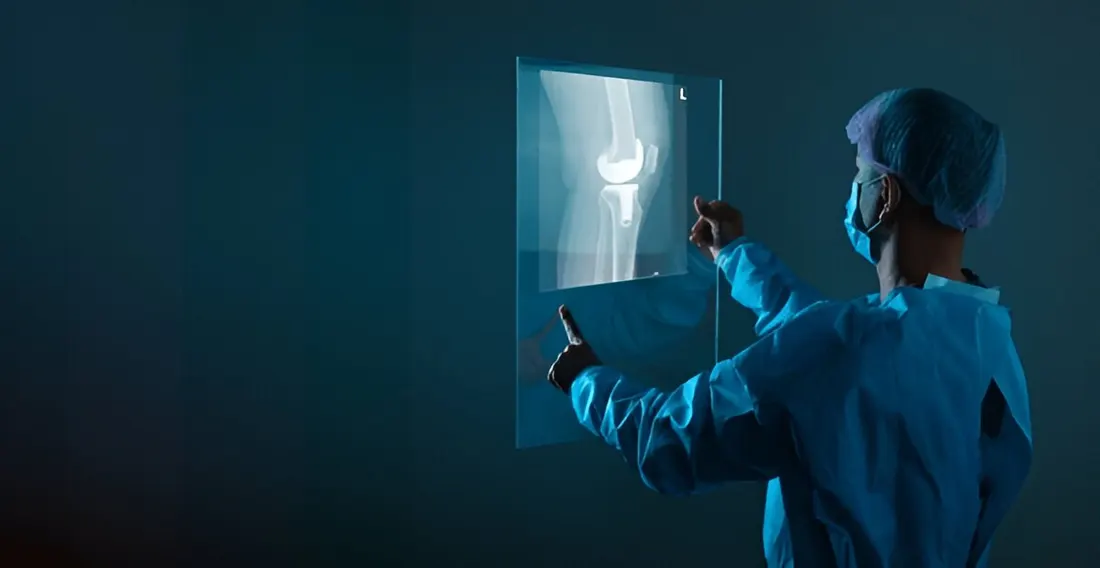
Orthopaedic doctor reviewing a spine X-ray before planning treatment

A correct diagnosis

Examination, straight-leg-raise and a neurological check of power, sensation and reflexes; X-ray where useful. MRI only when the result will change treatment.

Medicines — for a defined period

Safe doses for a set number of days or weeks, not indefinitely, with a review point. Long-term painkiller use is a warning sign, not a plan.

Staged physiotherapy

Core and hip strengthening, nerve-glide exercises for sciatica, posture retraining — with named exercises, sets and frequency, not "do some exercises".

Activity guidance

What to keep doing, what to change for now and how to return to work, prayer, travel and exercise in the right order.

Targeted options for stubborn nerve pain

For selected patients whose leg or arm pain is blocking progress, an image-guided injection or nerve-root block may be advised as a bridge that lets the exercise programme work.

Review at 6 and 12 weeks

If the plan is not working we re-examine, re-image if needed, and talk honestly about the next step — which for most people is still not surgery.

The honest line

When is spine surgery actually needed? (and who should NOT have it)

✓ Surgery is considered when

  • Weakness or numbness is progressing, not settling
  • There is bladder or bowel involvement — an emergency
  • Nerve pain from a disc or stenosis has not settled after a full conservative programme and is limiting life
  • A fracture or a slip is unstable
  • An infection or tumour demands it

✕ Surgery is NOT the answer for

  • Back pain alone with a "disc bulge" on the MRI
  • Pain that is already improving
  • An MRI finding that does not match the symptoms
  • Pain that has never had a proper 6–12 week conservative programme
  • Patients who arrive asking for an operation — we tell them this too
Reading your report

"My MRI says L4-L5 disc bulge" — is it serious?

Probably not by itself. Disc bulges, degeneration and small protrusions are found on the MRIs of many pain-free adults; the report describes the picture, not how you feel.

What matters is whether the finding explains your symptoms — which side, which nerve, and whether there is weakness. Bring the films and the report; the examination decides, not the words "bulge" or "degenerative". L1–L5 are the five lumbar (lower back) vertebrae; L4-L5 and L5-S1 are the levels most often affected.

Tap a word from your report

L4-L5 / L5-S1

The two lowest moving levels of the spine, where most bending and loading happens — so most disc problems are found here. A level name alone says nothing about severity.

Disc bulge

The disc has spread slightly beyond its edge all the way round. Very common after 30 and often painless; it only matters if it is pressing a nerve that matches your symptoms.

Protrusion / extrusion

A focal herniation — part of the disc pushing out (protrusion) or squeezing through (extrusion). More likely to press a nerve root than a bulge, yet most still settle with a proper conservative plan.

Degenerative changes

Age-related wear of discs and joints — the spine's grey hair. Universal with age and not, by itself, a reason for surgery.

Canal stenosis

Narrowing of the canal that carries the nerves. Mild narrowing is common; it becomes important when it causes leg heaviness and shrinking walking distance.

Nerve root compression

A nerve leaving the spine is being pressed. If the side and level match your leg or arm symptoms, this is the finding that drives the plan.

Listhesis

One vertebra has slipped forward on the one below. Graded 1–4; low grades are usually stable and managed with exercise.

Modic changes

Signal changes in the bone next to a worn disc. They describe the bone's reaction to wear, not a separate disease.

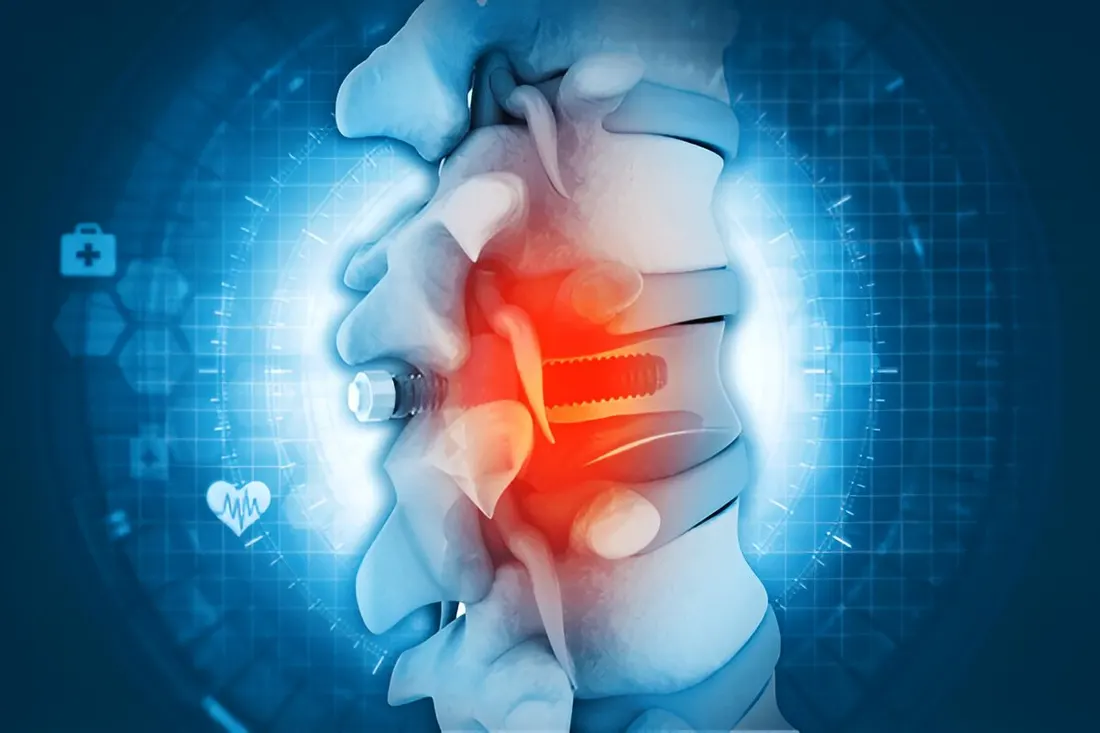
Illustration of a slipped (herniated) lumbar disc pressing on a nerve root
If surgery is the right step

Spine procedures explained — what each one is and who it is for

These are the established spine operations a patient may be advised; which one, if any, applies to you is decided only after examination and imaging. Where: spine surgery is carried out at an associated hospital with full anaesthesia and theatre facilities, cashless for eligible policies; assessment, the decision, and every follow-up visit are with Dr. Naresh at the Bowenpally clinic.

Slipped disc

Microdiscectomy

The fragment of disc pressing the nerve is removed through a small incision. For persistent sciatica or weakness that has not settled with conservative care. Typical hospital stay 1–3 days.

Stenosis

Laminectomy / decompression

Bone and ligament narrowing the canal are trimmed to give the nerves room. For canal stenosis with shrinking walking distance. Typical stay 2–4 days.

Instability

Spinal fusion with instrumentation

Two or more vertebrae are joined with screws, rods and bone graft. For unstable slips, some fractures and selected degenerative cases. Typical stay 3–5 days; bone fuses over 3–6 months.

Osteoporotic fracture

Vertebroplasty / kyphoplasty

Bone cement is injected into a collapsed vertebra to stabilise it and relieve pain when bracing has failed. Usually a short stay.

Trauma

Fixation for spine fractures

Unstable fractures after accidents are stabilised with screws and rods to protect the spinal cord and allow early mobilisation.

Nerve pain

Image-guided injections & nerve-root blocks

Steroid and local anaesthetic placed precisely around an inflamed nerve under imaging guidance — a bridge for selected patients, not a cure, and always paired with the exercise programme.

Conventional, well-established techniques with magnification where appropriate. Complex deformity correction and spinal-cord tumour surgery are referred to a spine sub-specialist or neurosurgical team.

The question everyone asks

Is spine surgery safe? Will it cause paralysis?

Serious nerve injury after modern spine surgery for disc or stenosis is rare — well under one in a hundred in published series — and the operations are done with magnification and, where needed, nerve monitoring. The greater real-world risks are the ordinary ones of any surgery (infection, clots, anaesthesia) and the risk of operating when surgery was not needed.

The condition most linked to paralysis is an untreated emergency such as cauda equina syndrome — which is why the red-flag list at the top of this page matters more than fear of the operation itself.

< 1 in 100serious nerve injury after disc or stenosis surgery in published series
9 in 10sciatica episodes settle without an operation in 6–12 weeks
Same daymost patients are walking after microdiscectomy or decompression
After surgery

Recovery after spine surgery: what most patients can expect

Physiotherapy continues after surgery; the written plan is the same habit as before. Prayer and floor-sitting, long travel and return to field work are discussed individually.

Day 0–1

Walking the same or next day after microdiscectomy or decompression.

Day 1–3

Home after microdiscectomy/decompression; fusion patients usually go home by day 3–5.

Week 2–3

Desk work and light daily activity; driving once off strong painkillers and able to brake comfortably.

Week 6–8

Field, manual and physical work after microdiscectomy or decompression.

Month 3–6

After fusion, the bone joins over 3–6 months with a staged return to bending and lifting.

Choosing the right doctor

Orthopaedic spine surgeon or neurosurgeon — whom should I see?

Both operate on the spine. For back pain, sciatica, slipped disc, spondylosis and fractures, an orthopaedic surgeon is a right first stop; we refer to neurosurgical colleagues for spinal-cord tumours and selected complex cases, and say so.

Orthopaedic spine surgeon (MS Ortho)

  • Comes from the bone-and-joint side of training
  • Degenerative disease, disc, stenosis, spondylolisthesis
  • Spine fractures and osteoporotic collapse
  • Deformity and the mechanics of the spine
  • Sees the spine alongside the hips and knees that often mimic it

Neurosurgeon

  • Comes from the brain-and-nerve side of training
  • Tumours of the spinal cord and its coverings
  • Many of the same degenerative operations
  • Complex intradural and cord conditions
  • The right referral when the cord itself is the problem
Money, plainly

Spine treatment cost in Hyderabad — what decides it

Non-surgical care — consultation, X-ray or MRI where needed, physiotherapy sessions and, for some, an injection — is usually a small fraction of the cost of surgery. Surgery cost depends on five things:

The procedure

Microdiscectomy costs less than a decompression, which costs less than an instrumented fusion.

Implants

Screws, rods and cages add to a fusion; a microdiscectomy needs none.

Hospital room category

General ward, semi-private or private room at the associated hospital.

Length of stay & anaesthesia

1–3 days for most disc surgery; 3–5 days for fusion; anaesthesia and ICU time if needed.

Before admission you get a written estimate covering surgeon, hospital and implants. Cashless facility is available for eligible insurance policies at the associated hospital, and our team helps with the paperwork.
Second opinion

Advised spine surgery elsewhere? Bring the MRI.

Bring the films, reports and the advice you were given. We will tell you whether the finding explains your symptoms, whether a proper conservative course has been completed, and whether surgery is needed now, later or not at all. Many patients who come for a second opinion leave with a plan, not an operation.

Why here

Why patients choose Sharada for spine care

  • One doctor from first visit to recovery — the surgeon who examines you is the one who follows you up.
  • Non-surgical first, with a written plan reviewed at 6 and 12 weeks.
  • Honest about what we treat and what we refer — complex deformity and cord tumours go to the right sub-specialist.
  • 25+ years of orthopaedic practice; Telugu, Hindi and English spoken.
  • Cashless support for eligible policies at the associated hospital.
  • Rated 5.0 on Google by 70+ patients — Bowenpally, Secunderabad.
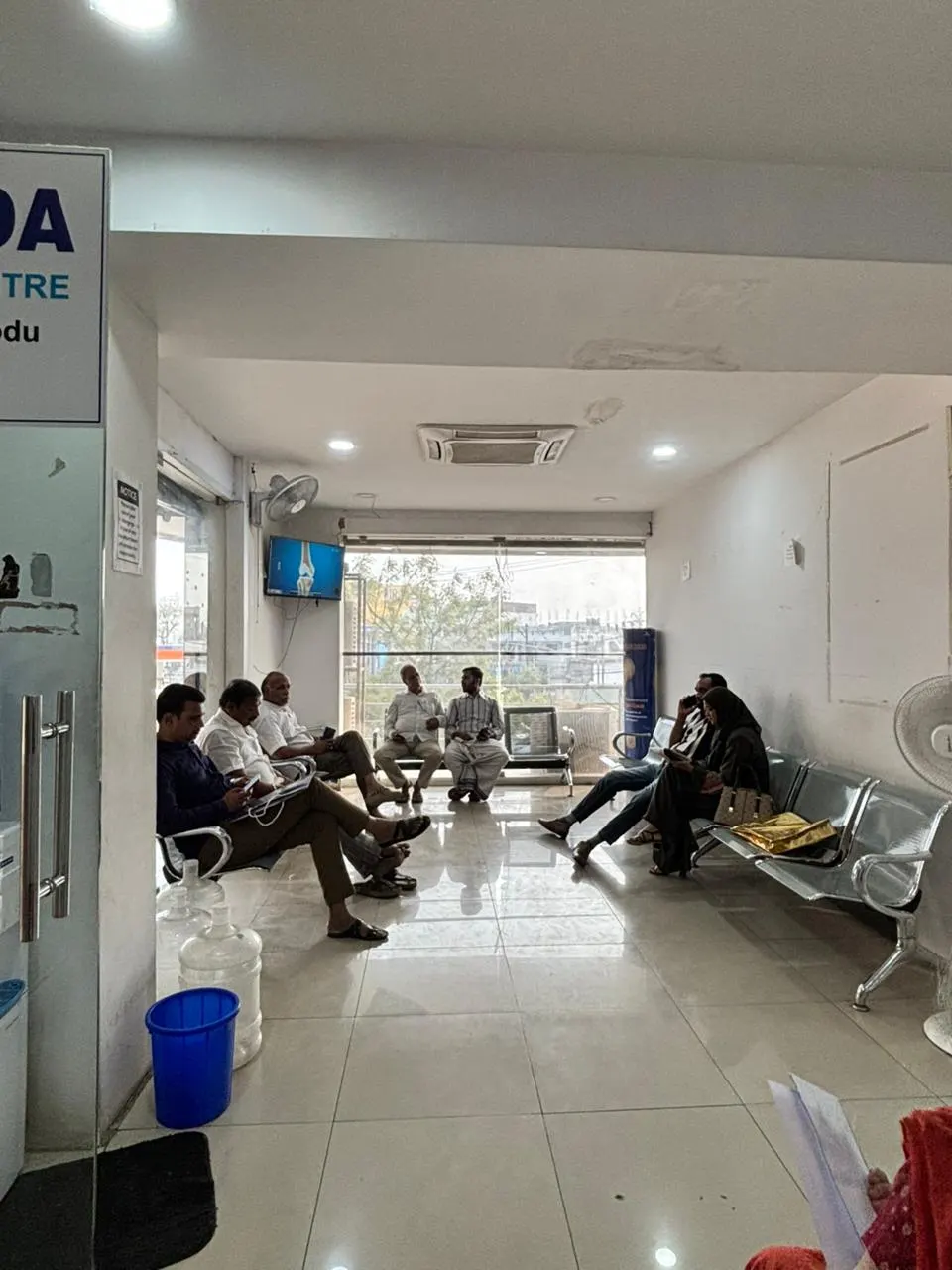
Waiting area at Sharada Orthopaedic Centre, Bowenpally, Secunderabad
Dr. Naresh P. Hanagodu
Meet the doctor

Dr. Naresh P. Hanagodu

MBBS, MS (Ortho), D.Ortho (Bombay)Consultant Orthopedic & Joint Replacement Surgeon25+ years1,200+ joint replacements

Orthopaedic spine care — back and neck pain, sciatica, slipped disc, spondylosis, stenosis and spine fractures — alongside knee and hip replacement, fracture care and sports injuries. Rotary Vocational Award (2001–02), Rotary Club of Secunderabad Cantonment. Practises at Sharada Orthopaedic Centre, Bowenpally, Secunderabad.

About Dr. Naresh
From our Instagram

Watch: Dr. Naresh explains, in under a minute

Short patient-education reels from @drnareshhanagodu. Tap a video to play it here.

Where we are

Spine care for Secunderabad and Hyderabad

Ganesh Nagar Colony, Bowenpally, Secunderabad 500011 — ground-level, wheelchair-accessible, 10–20 minutes from the areas below and about 30 minutes from Kompally, Balanagar, Malkajgiri and Sanath Nagar. Bring your MRI, X-rays and previous prescriptions; if you cannot come in yet, WhatsApp the report first.

Tap an area for directions from there.

Consulting hours Monday to Saturday, 1:00 PM to 6:30 PM; Sunday closed.

FAQ

Frequently asked questions about spine treatment in Hyderabad

Who is the best spine doctor in Hyderabad?
There is no official ranking. For back or neck problems you want a qualified orthopaedic surgeon (MS Ortho or D.Ortho) or neurosurgeon with long experience, who examines you before reading the MRI, tries a proper non-surgical plan first, explains clearly when surgery is and is not needed, and follows you up personally. Dr. Naresh P. Hanagodu, MS (Ortho), D.Ortho (Bombay), has 25+ years of orthopaedic experience and provides spine care at Sharada Orthopaedic Centre, Bowenpally, Secunderabad; complex deformity and spinal-cord tumour cases are referred to a sub-specialist or neurosurgeon.
Which doctor is best for spine problems — an orthopaedic surgeon or a neurosurgeon?
Both treat the spine. For back pain, sciatica, slipped disc, cervical spondylosis, stenosis and spine fractures, an orthopaedic spine surgeon is a right first stop; neurosurgeons are essential for tumours of the spinal cord and selected complex cases. A good orthopaedic surgeon refers to a neurosurgeon when the cord itself is the problem, and says so.
Who is the best doctor for back pain in Hyderabad?
Start with an orthopaedic doctor. Expect a physical and neurological examination, an X-ray only if useful, an MRI only if it will change treatment, and a written plan of medicines for a defined period plus staged physiotherapy, reviewed at 6 and 12 weeks. Most back pain settles this way; surgery is for the few with persistent nerve compression or weakness.
Which hospital in Hyderabad is best for back pain?
Most back pain does not need a hospital at all — it needs a good doctor and a plan. At Sharada Orthopaedic Centre, Bowenpally, diagnosis, the non-surgical programme and all follow-up happen at the clinic; if surgery is ever needed, it is done at an associated hospital with full theatre and anaesthesia facilities, cashless for eligible policies.
Can a slip disc heal without surgery?
Yes — most do. About 9 in 10 slipped-disc episodes with sciatica improve without surgery in 6–12 weeks with a correct diagnosis, medicines for a defined period, nerve-glide and core exercises, activity guidance and, for some, an image-guided injection. Surgery is reserved for persistent nerve pain, progressive weakness, or bladder or bowel involvement.
Can a slip disc be cured by physiotherapy?
Physiotherapy is the core of slipped-disc treatment — nerve-glide exercises, core and hip strengthening and posture retraining, done with named exercises and frequency. It is not enough on its own when there is progressive weakness, bladder or bowel symptoms, or nerve pain that has not settled after a full 6–12 week programme; those patients need a surgical opinion.
Can a slip disc heal permanently?
The herniated fragment usually shrinks and the nerve settles, and most people return to normal life. A minority have another episode at the same or a nearby level over the years; keeping the core strong, managing weight, lifting correctly and avoiding long static sitting lowers that risk. Recurrence can also follow surgery, which is why exercise continues afterwards.
Is spine surgery safe? What is the risk of paralysis?
Serious nerve injury after modern spine surgery for disc or stenosis is rare — well under one in a hundred in published series. The commoner risks are the ordinary ones of any operation: infection, clots, anaesthesia, and the risk of operating when surgery was not needed. Paralysis is far more often caused by an untreated emergency such as cauda equina syndrome than by the operation itself.
How long does recovery take after spine surgery?
After microdiscectomy or decompression most patients walk the same or next day, go home in 1–3 days, return to desk work in 2–3 weeks and to field or manual work in 6–8 weeks. After fusion, patients typically go home in 3–5 days and the bone takes 3–6 months to join, with a staged return to bending and lifting. Physiotherapy continues throughout.
Can you live a normal life after spine surgery?
Yes — for most people the aim of surgery is exactly that: walking, working, travelling and praying without the leg pain or weakness that led to it. What changes is the habit: a maintained exercise programme, correct lifting and, after fusion, a period of restricted bending. Heavy manual work and contact sport are discussed individually.
What does L4-L5 on my MRI mean? Is a disc bulge serious?
L4-L5 is the level between the fourth and fifth lumbar vertebrae in the lower back — with L5-S1, the level most often affected. A disc bulge there is very common and often painless; it matters only if it is pressing a nerve that matches your symptoms on examination. The report describes the picture, not how you feel — bring it and let the examination decide.
How much does spine treatment or surgery cost in Hyderabad?
Non-surgical care — consultation, imaging where needed, physiotherapy and, for some, an injection — is usually a small fraction of the cost of surgery. Surgery cost depends on the procedure (microdiscectomy versus fusion), implants, hospital room category, length of stay and anaesthesia. You receive a written estimate covering surgeon, hospital and implants before admission; cashless facility is available for eligible policies at the associated hospital.
When should I see a doctor for back pain?
Today if you have leg or foot weakness, numbness around the groin or buttocks, trouble passing or controlling urine or stool, back pain after a fall or accident, or fever or unexplained weight loss with back pain. This week if pain runs below the knee, there is tingling or numbness in an arm or leg, or pain wakes you at night. Otherwise, come in if back-only pain is not clearly improving by 4–6 weeks.
Do you treat back pain in elderly or diabetic patients, or after a fall?
Yes. Back pain after a minor fall in an older adult can be an osteoporotic vertebral fracture and needs an X-ray the same day; treatment is usually bracing, pain control and bone-strengthening medicines, with a stabilising procedure only if the fracture is unstable or painful despite this. Diabetes and heart or kidney disease are taken into account in medicine choices and in any surgical planning.

Back pain that is not settling? Get it examined, not guessed.

Sharada Orthopaedic Centre, Ganesh Nagar Colony, Bowenpally, Secunderabad 500011 · Monday to Saturday, 1:00 PM – 6:30 PM. WhatsApp your MRI or call.

Call NowCall WhatsAppWhatsApp Book AppointmentBook
WhatsApp us
Chat with us on WhatsAppTypically replies within a few minutes.